The Building on Thurman Kept Rejecting Grocery Stores. A Sandwich Shop Finally Stuck.
September 17, 2026
September 17, 2026
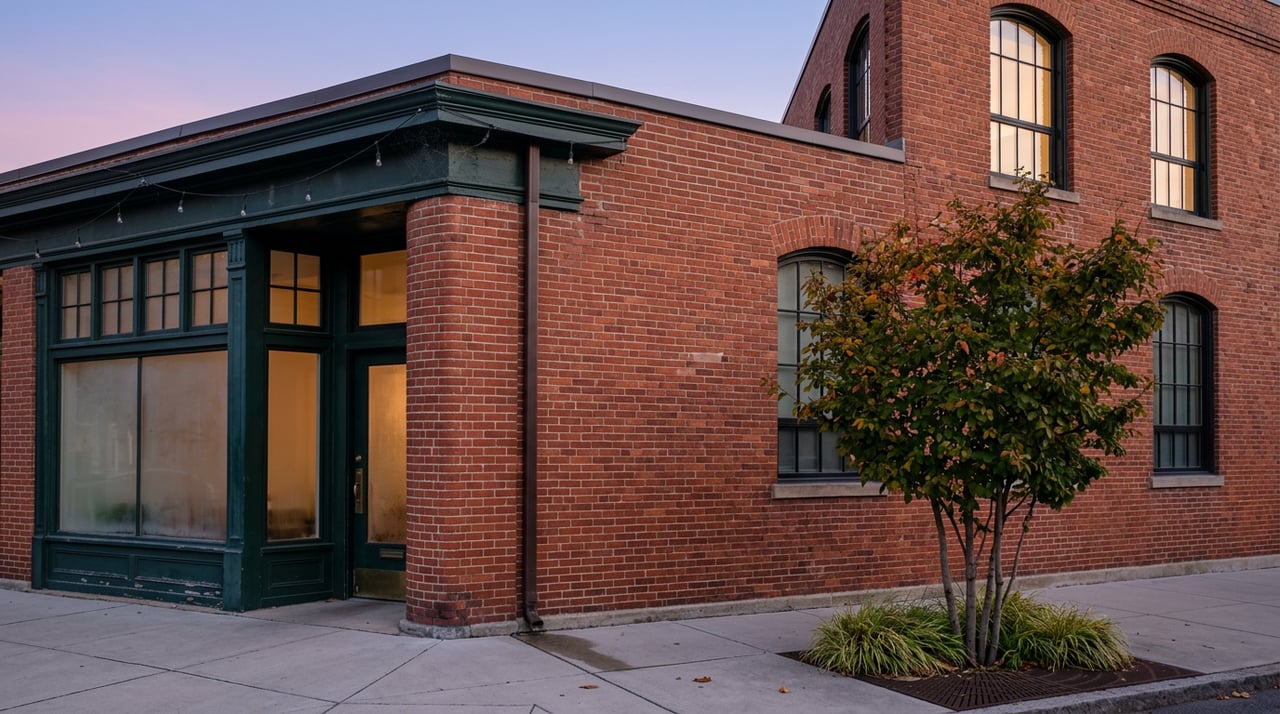
If you have walked or driven along NW Thurman Street any time in the last three years, you have passed the dark windows at 2375. Faded signage, an empty parking strip, the particular stillness of a building nobody quite knows what to do with. For most of that time, the neighborhood's working theory was simple: this used to be a grocery store, so it will become one again. That theory kept failing, deal after deal, until the tenant that finally made it work wasn't selling groceries at all.
Food Front Cooperative Grocery opened at 2375 NW Thurman in 1972, built on a premise that sounds almost quaint now: nobody in Portland was reliably selling organic, natural groceries, so a member-owned store filled that gap. It ran for 51 years. By April 2023 the math had stopped working. The co-op had paid down more than a million dollars in debt but still owed $444,000, its general manager had resigned, and the board concluded there was no path forward without one. The store closed for good on April 24, 2023, at noon, with a letter asking members to fill their baskets one last time.
That closure left more than a sentimental hole. It also left a physical one, in a walkable stretch of Northwest Portland where a full grocery had anchored daily errands for half a century. The assumption that followed, almost immediately, was that someone would step in and reopen it as exactly that: a grocery store.
What followed instead was three years of near-misses. In 2024, the co-op's board moved toward a $2.55 million sale to K-5 Urban Holdings LLC, a firm that already owned adjacent properties on the block. The deal split the membership. Some worried the developer's real interest was the land underneath the store rather than a food business inside it, since K-5 owned three adjacent homes and critics feared a larger redevelopment play. Longtime member Dan Anderson, who joined the co-op in 1986, captured the sentiment behind the fight when he told reporters,
"If you go back 40 years, nobody really sold organic groceries."
That same year, someone stripped the copper out of the building's refrigeration system from the roof, causing nearly $100,000 in damage to a store that had already been closed for over a year.
Separately, reporting through 2025 showed Eugene-based grocer Market of Choice in talks to open a small-format store in the space. That deal also collapsed, with the company citing, in part, the death of its former CEO. Eventually the property changed hands again, this time to local developer Mark New and his company, Development Company of the West, who completed the purchase for about $1.5 million and began planning to split the building into two retail spaces, with hopes that at least one would go to a grocery or food-service tenant.
Line up those numbers and the gap is hard to miss. A grocery-anchored sale pitched at $2.55 million never closed. The building eventually sold for roughly a million dollars less, to a buyer with no grocery ambitions of his own, just an interest in finding tenants who could actually make the space pencil.
The tenant that emerged is Better Half, a sandwich shop with deep local roots and no grocery aspirations whatsoever. Better Half first opened in North Portland early in the pandemic and built a following on a diet-inclusive menu, meat sandwiches with vegan counterparts, plenty of gluten-free options. Its North Fremont storefront closed last November after the building was sold to Portland Public Schools, leaving the shop searching for a new home.
That search ended at 2375 NW Thurman. The larger footprint means Better Half can bring back both breakfast and lunch service at once, along with housemade English muffins and chips, and an expanded coffee program that adds espresso drinks to the lineup. On its own site, the shop currently lists its status as
"anticipated reopening - Sept. 2026"
which puts the opening squarely in the month this piece is being written. After three years of speculation about groceries, the building's next chapter is arriving as coffee and sandwiches.
Better Half isn't opening into a vacuum. Local coverage has described the Thurman corridor it's rejoining as already anchored by The Dragonfly Coffee House, St. Honoré Bakery, and Phuket Cafe, a small cluster of food and drink spots that has kept the block functioning even while the old grocery sat dark. That existing mix matters for reading what's happening here. The corridor was never entirely without food service. It was without a full breakfast-and-lunch counter with its own kitchen, the kind of spot people duck into on a weekday morning rather than plan a special trip around.
Here is the part that the three years of failed grocery deals actually reveal. Every serious attempt to refill 2375 NW Thurman assumed the neighborhood's loss was categorical: a grocery store closed, so a grocery store should reopen. That assumption drove the K-5 negotiation, and it drove Market of Choice's interest in a small-format store. Both fell apart for reasons specific to each deal, but the pattern across both is that grocery-scale plans kept failing to close while a smaller, food-service concept did not.
That doesn't mean the neighborhood didn't feel Food Front's absence. Reporting at the time of its closure was explicit that the loss "left a noticeable gap in walkable grocery options." But felt absence and workable replacement are different questions. What actually cleared, after three years and at least three named suitors, was a tenant sized to a kitchen and a counter rather than a full retail grocery footprint, filling in next to a coffee house, a bakery, and a cafe that had already been quietly carrying the block's daily food traffic. The building didn't need to become what it used to be. It needed to become something the surrounding block could actually support.
For anyone who has walked past those dark windows on a morning coffee run and wondered what would finally stick, that's the answer arriving this month. Not the return of the old grocery co-op, but a sandwich counter sized to fit the block as it actually functions today.
If you're weighing a move to Northwest Portland, or trying to make sense of what a corridor like this signals about demand and pricing on a given block, Shannon Janssen can walk through what a story like this actually means for property values and timing. Let's Connect.
Seller Tips
Why Some Portland Homes Get Showings Immediately… And Others Don’t
Seller Tips
Two real Cedar Mill case studies that show how pricing strategy, preparation, presentation, and market positioning dramatically impact a seller’s final outcome.
I work tirelessly for my clients and can be relied on to be responsive, thorough and persistent. Real Estate transactions can be stressful in any year, and that is especially true during a rapidly shifting market. By providing expert guidance, innovative marketing and results driven plans, I'm able to ease the process for every client.