Why a 250-Seat Steakhouse Just Filled the Pearl's Most Stubborn Vacancy
August 20, 2026
August 20, 2026
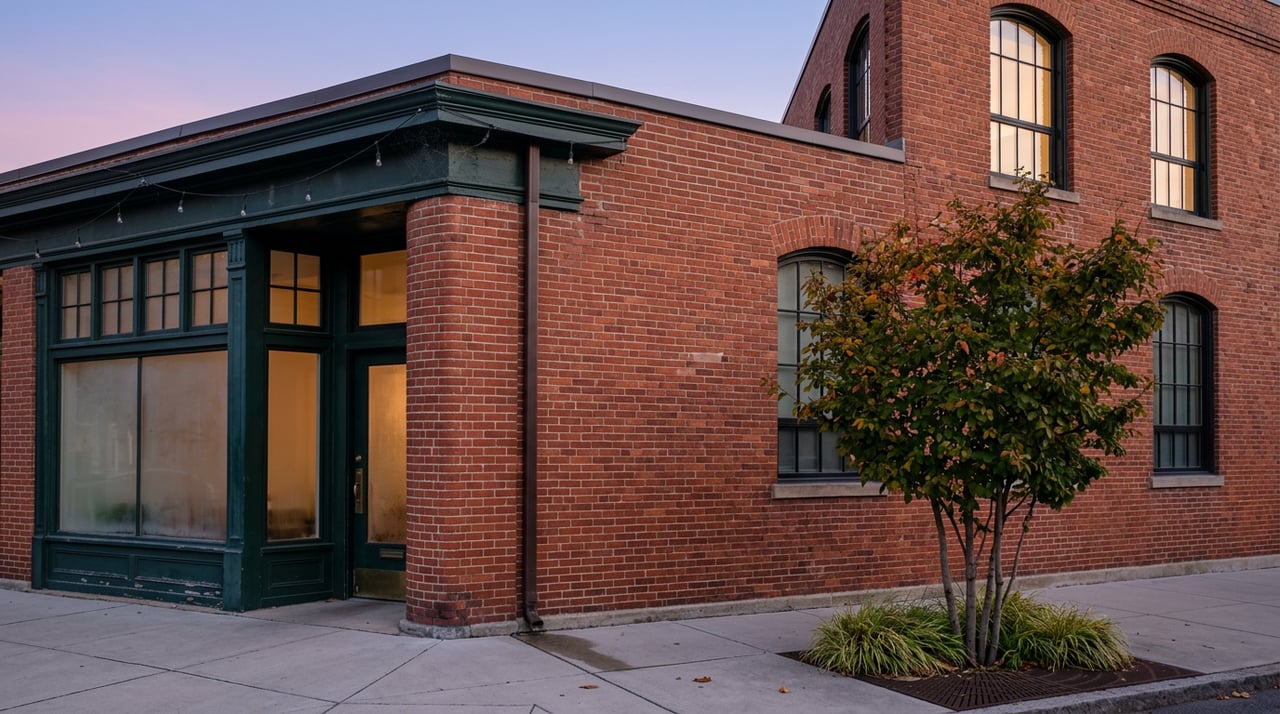
For nine years, the building at 1210 NW Hoyt sat dark. Oba! closed in 2017 after a two-decade run, and the space that once anchored the corner of NW 12th and Hoyt became the kind of storefront longtime residents stopped noticing, boarded windows, a roofline that needed work, the occasional graffiti tag that got painted over and reappeared. It was the Pearl's version of a missing tooth: not ugly enough to complain about, just there, unresolved, year after year.
On July 31, it stopped being unresolved. The Malarkey, a 250-seat steakhouse and seafood grill from chef Brian Malarkey, opened inside that same building, and the choice of what replaced Oba! tells you more about where the Pearl's dining scene is headed than any single new menu could.
Malarkey and his brother James built their reputation in Bend with Hawkeye & Huckleberry Lounge, a steakhouse the brothers have pointed to as generating roughly $8 million a year in revenue. That figure matters here, because it's the number they're using to justify the scale of what they just built in the Pearl: a 250-seat dining room with a 60-person private event space, a sunken bar built for a DJ, and design details that read more like theater set pieces than restaurant decor, a golden stag over the bar, a mounted motorcycle, a private dining nook named for Hazel Ying Lee, the Portland-born aviator who became the first Chinese American woman to fly for the U.S. military.
You don't build that much capacity for neighborhood foot traffic. You build it because you're betting people will drive, walk, or book a table specifically to be there, for a birthday, a client dinner, a group of ten who wants a story to tell afterward. The Malarkeys are wagering that the Pearl can now support the kind of destination-scale dining that used to require a trip downtown or across the river.
Compare that to what opened a few blocks away around the same time. Guay Tiew, from Chookiat "Hamm" Saenguraiporn, the chef behind Thai Peacock and Khao Moo Dang, is a counter-service concept built around a single dish: boat noodle soup, served build-your-own style with a choice of broths and add-on pork in braised, minced, meatball, or crackling form. It's the opposite bet from The Malarkey in almost every way, small, focused, unglamorous by design. But it's the same underlying wager. A restaurant that does one dish well doesn't survive on impulse walk-ins. It survives on people who already know what they want and go looking for it. Saenguraiporn made that bet once already with Khao Moo Dang and it worked well enough to repeat the model in the Pearl specifically.
Put those two openings side by side and you get a pattern. A maximalist 250-seat spectacle and a stripped-down noodle counter aren't competing for the same customer, but they're both premised on the idea that people will seek out the Pearl for food rather than just eat there because they happen to be in the neighborhood already. That's a different kind of demand than the Pearl's restaurant row has historically run on, and it showed up twice in the same summer.
The third data point isn't a restaurant. It's a market that came back after a decade away.
The Pearl District Culinary Farmers Market shut down years ago and returned this June, and the organizers were explicit that it wasn't going to be a standard produce stand. It's built around chefs and food artisans as much as growers, with chef demonstrations from a mobile stage, live music, and a special license that allows sampling and bottle sales of beer, cider, and wine on-site, an unusual setup for a farmers market and one that signals the organizers wanted something closer to a weekly food event than a grocery run.
The location wasn't an accident either. It's held on NW 13th Avenue between Everett and Glisan, the same stretch where Andina, Mediterranean Exploration Company, and Jenken already operate. Rather than finding open ground somewhere quieter, organizers planted the market directly inside the Pearl's existing restaurant cluster, turning one Sunday morning stretch of sidewalk into an extension of the neighborhood's dining identity instead of a separate errand.
If you live nearby, here's what that looks like in practice through the rest of the season:
None of that is incidental to the restaurant openings a few blocks away. It's the same instinct at a different scale: build something people plan around, not something they stumble into.
A steakhouse operator from Bend, a Thai chef who already had one hit format, and a group of market organizers reviving something that had been gone for ten years, none of them coordinated with each other. But they made the same read on the neighborhood in the same season, and that's worth sitting with if you live here.
For years, the Pearl's food scene functioned mostly as a convenience for the people already inside it, a place to grab lunch between meetings or a drink after work. What opened this summer reads differently. A 250-seat destination dining room doesn't get built for lunch traffic. A single-dish noodle counter doesn't get built for people who weren't already looking for it. A market that programs live chef demos and full bar service doesn't get built for people just picking up produce on the way home.
That shift shows up in small, tangible ways if you're paying attention on the ground. The corner that sat dark for nine years now has a line some nights. A Sunday morning stretch of NW 13th that used to be quiet now has a stage, a crowd, and a reason to linger past the produce table. None of this changes the Pearl overnight, but it's the kind of texture that tells you a neighborhood's rhythm is shifting before any market report catches up to it.
If you're the kind of resident who tracks this stuff, not because you're weighing a move but because you like knowing what's happening two blocks over, keep an eye on that Hoyt Street corner and that Sunday market through the end of September. Both are still finding their footing, and both are worth watching to see whether the bet pays off.
I'm Shannon Janssen, and I spend a fair amount of time paying attention to what's changing in the neighborhoods I work in, not just the listings, but the small shifts that tell you something real is happening. If you want more dispatches like this one before you ever have a reason to call an agent, that's exactly the kind of local read I like to share. And if a move to or from the Pearl does end up on your horizon someday, I'd welcome the conversation. Let's Connect.
I work tirelessly for my clients and can be relied on to be responsive, thorough and persistent. Real Estate transactions can be stressful in any year, and that is especially true during a rapidly shifting market. By providing expert guidance, innovative marketing and results driven plans, I'm able to ease the process for every client.