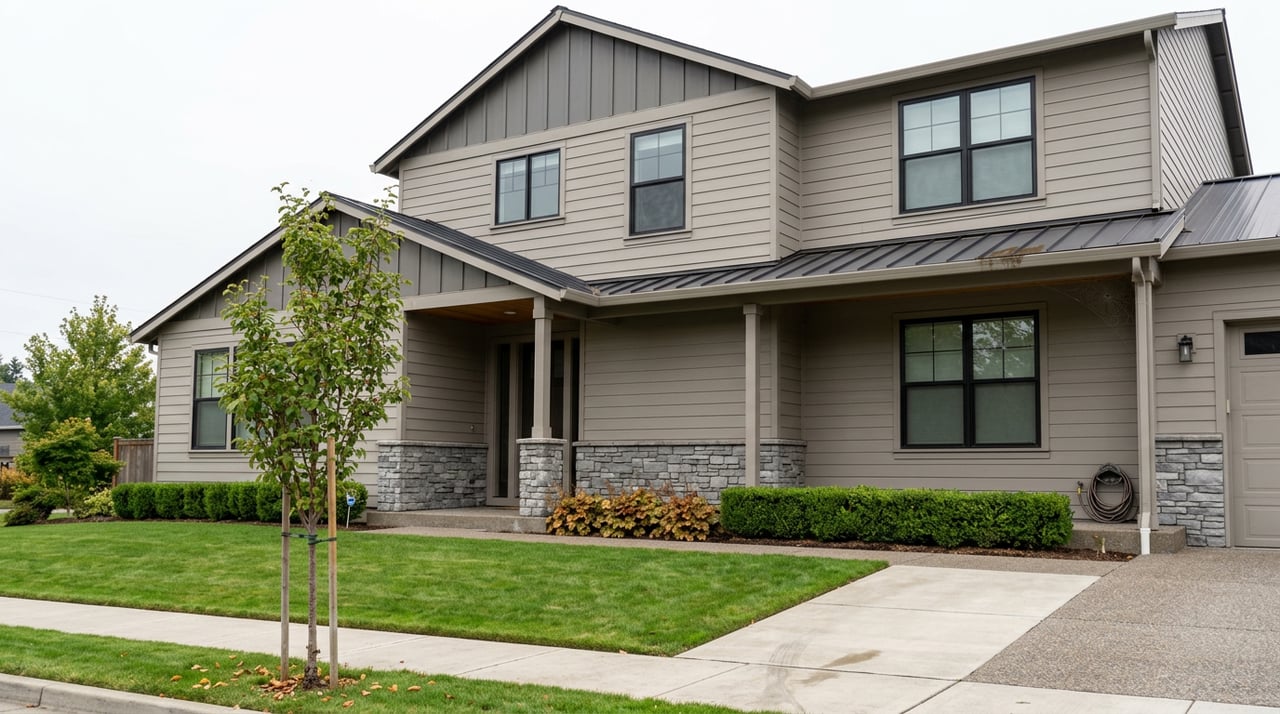
Hillsboro, Oregon Housing Market Split: New Construction vs. Resale
August 13, 2026
August 13, 2026
Ask three real estate portals what a home costs in Hillsboro right now and you'll get three different answers. Redfin puts the median sale price at $502,000 over the three months ending in May 2026, down 4.3 percent from a year earlier. Zillow's home value index, updated in late May 2026, sits at $520,244, down 2.9 percent over the past year. A third source tracking active list prices in August 2026 shows a median north of $575,000, with homes sitting on the market for nearly three months.
None of these numbers is wrong. They're measuring different things, sold prices versus list prices, three-month windows versus twelve, and that alone should tell you something: a single median for a city this size is trying to describe two markets that no longer move together. One of those markets is new construction, largely insulated and still absorbing buyers at a steady pace. The other is older resale inventory sitting close to Hillsboro's semiconductor employers, and it's been quietly repricing for the better part of a year.
If you're comparing Hillsboro to other Westside communities, the city-wide number won't tell you which market you're actually looking at. Here's what will.
Hillsboro's housing market has spent the last two decades tied to one employer more than most cities its size: Intel. The company's Hillsboro campuses, Ronler Acres, Jones Farm, and Hawthorn Farm, have functioned as the region's research and development hub since the 1970s, and Intel's own headcount has tracked the local job market's health almost one to one.
That relationship became a liability starting in late 2024. The cuts came in three distinct waves:
Combined with earlier reductions, Intel's Oregon workforce has fallen from a peak of roughly 23,000 to around 18,000. In an Axios report, Portland State University economist Rajiv Sharma put his finger on why this kind of shock lingers longer than a single earnings report:
"The uncertainty itself is costly to economic decision-making, to business decision-making."
That uncertainty doesn't stay contained to the company. It moves into the housing decisions of everyone who works there, everyone who sells to someone who works there, and every buyer trying to figure out if now is the right time to plant roots near a campus that just cut a sizable share of jobs in a single summer.
Here's where it gets specific. A market analysis built on original RMLS data found that Hillsboro's blended price averages have stayed relatively stable through 2025, but only because new-construction closings, on land entitled and permitted well before the layoffs began, kept flowing into the market and propping up the citywide numbers. Strip those new-construction sales out and a different picture appears: existing condominiums and attached resale properties near the employment corridor have shown consistent price softening and meaningfully longer time on market. In plain terms, proximity to the semiconductor corridor no longer commands the premium it once did, at least for the denser, more employment-tied segments of housing stock.
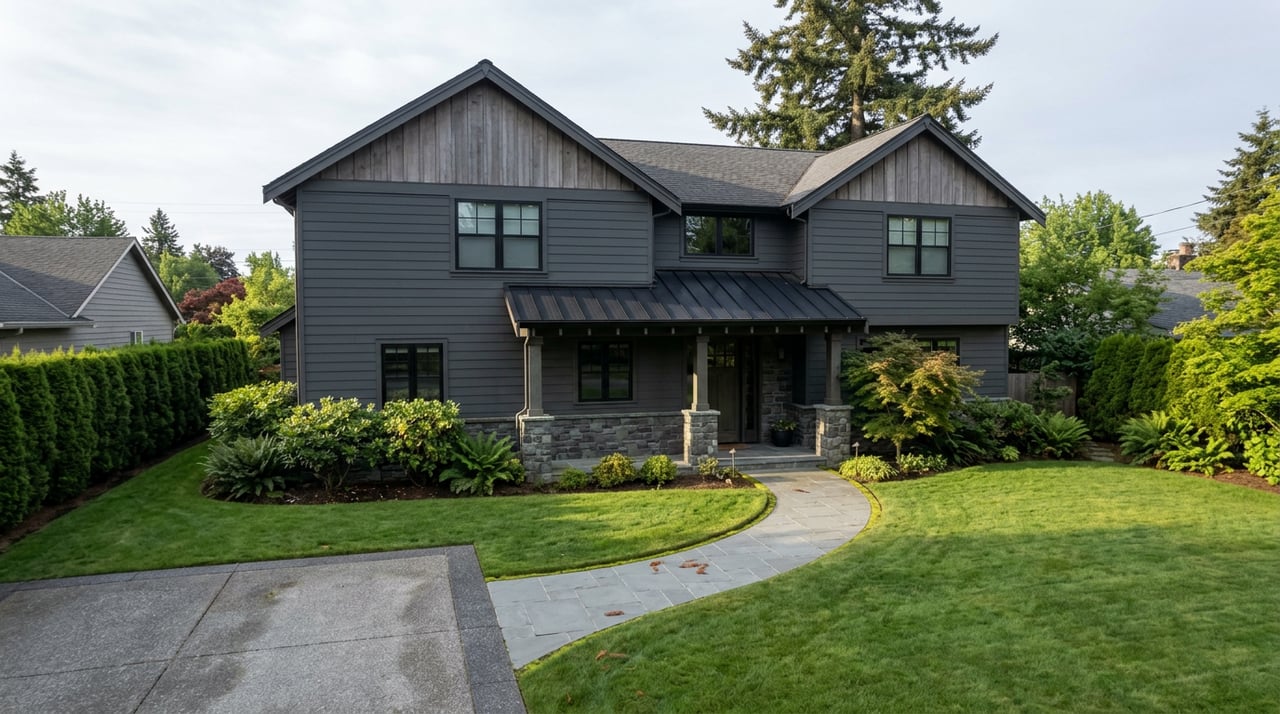
This split has a geography. South Hillsboro is the newer half of the story: a 1,400-acre master plan where developers Pahlisch Homes and Newland Communities broke ground in 2018 across three neighborhoods, Reed's Crossing, Butternut Creek, and Rosedale Parks. More than 3,000 homes have been permitted there since, with builders including David Weekley Homes and Stone Bridge Homes NW active in the mix. Reed's Crossing in particular has built its identity around lifestyle infrastructure rather than commute distance to any one employer: a 23-acre Greenway, a children's play area called the Discovery Zone, and walkable access to Tanasbourne Town Center. None of that is designed around Intel. It's designed around parks and schools first.
Orenco Station tells the older story. Designed as a deliberate transit-oriented alternative to sprawl, it packed roughly 1,800 homes onto 209 acres around a Washington County MAX light rail stop, and has been studied nationally as one of the more successful attempts at walkable, transit-connected suburban design. That design bet heavily on commuters, many of them Intel employees, riding the Blue Line to campus. It's a smart, well-built neighborhood. It's also more exposed than most to a single employer's headcount, and that exposure is now showing up in how long its condos and townhomes sit before they sell.
If you're cross-shopping Hillsboro against Beaverton, Cedar Mill, or another Westside community, the practical takeaway is this: ask which segment a specific listing belongs to before you compare it to a citywide average. A new-construction home in South Hillsboro and a resale condo near Orenco Station might carry similar list prices this month, but they're behaving like different assets. One is backed by a builder's warranty, a master-planned amenity package, and a pricing structure the developer controls. The other is subject to whatever a specific buyer pool, right now smaller than it was two years ago, decides it's worth.
That doesn't mean new construction is automatically the safer buy or that resale near the employment corridor is a mistake. It means the questions you ask should change depending on which market you're actually in. For new construction, ask about builder incentives and rate buydowns baked into the price, since those can make the sticker price look firmer than the real cost to you. For resale near the Intel campuses, ask for sold comparables from the last 60 days specifically, not the last six months, since a market repricing this actively can move faster than older comps reflect.
If your home sits in the resale segment near Hillsboro's tech corridor, the citywide median is not your friend right now. Pricing to a blended average that includes new-construction sales you're not competing against is one of the fastest ways to sit unsold while a home three miles away, backed by a builder's marketing budget and warranty, moves quickly. The homes doing well in this market right now are the ones priced against their actual competitive set, not the headline number, and prepared to show well against builder-grade finishes buyers have gotten used to touring on weekends.
Does this mean Hillsboro overall is a weak market? No. It means Hillsboro is two markets wearing one label. South Hillsboro's new-construction pipeline is still active and absorbing buyers. The softening is concentrated in older attached resale stock closest to the employment corridor.
Will this correct itself once Intel's layoffs stop? Possibly, but the timeline is uncertain. The reductions ran through November 2025, and a market analysis covering that period noted the broader averages may not fully reflect the impact until more of the pre-layoff new-construction pipeline clears in 2026 and beyond.
How do I know which segment a specific listing falls into? Ask for sold comparables limited to the same micro-market, new construction against new construction, resale against resale within the same mile radius, rather than a citywide pull. If an agent can't produce that breakdown quickly, ask again.
A median price is a starting point, not a decision. If you're weighing Hillsboro against other Westside communities, or trying to figure out whether a specific listing is priced against reality or against a citywide average that no longer applies to it, the answer requires knowing which of Hillsboro's two markets you're actually standing in.
Shannon Janssen works across Hillsboro and the broader Westside with exactly this kind of segment-specific pricing analysis, along with direct experience on the new-construction side through her work as exclusive listing agent for Canopy Building Group. If you're trying to make sense of what a specific Hillsboro address is really worth right now, Let's Connect.
I work tirelessly for my clients and can be relied on to be responsive, thorough and persistent. Real Estate transactions can be stressful in any year, and that is especially true during a rapidly shifting market. By providing expert guidance, innovative marketing and results driven plans, I'm able to ease the process for every client.